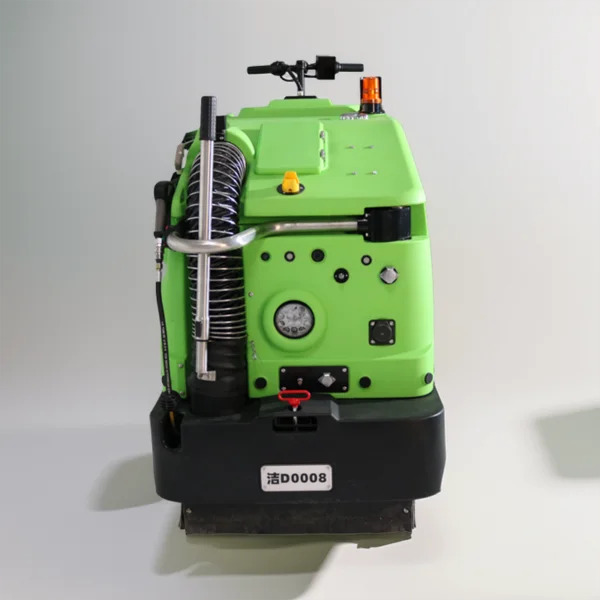
Municipal sanitation crews and facility maintenance teams face a persistent reality: streets accumulate debris faster than manual methods can keep pace. The shift toward mechanical sweeping has introduced equipment that changes not just how streets are cleaned, but how cleaning schedules are planned and executed. A street vacuum operates on principles that differ significantly from traditional broom-based sweepers, relying on airflow rather than physical contact to remove particles from paved surfaces. Greendorph’s YJ80 combines a powerful vacuum system with water-spray cleaning, turbine blowing, and dust-suppression misting for urban cleaning applications.
Suction Power That Determines Real-World Cleaning Results
The effectiveness of any street vacuum machine hinges on its ability to generate sufficient airflow to lift debris from pavement textures and crevices. Negative-pressure systems create a vacuum that pulls particles upward through a suction nozzle, capturing material that mechanical brooms might miss or simply relocate. This approach proves particularly valuable for fine dust and small particulates that contribute to urban air quality concerns. The YJ80’s engineering around this principle means operators can expect consistent pickup performance across different surface types, from smooth asphalt to textured concrete.
What sets vacuum-based sweeping apart is its capacity to handle both dry and slightly moist debris without losing effectiveness. Vacuum-based sweeping can help collect fine debris efficiently, while water-spray and flushing functions can support cleaning when surface conditions require additional moisture. This feature becomes critical during morning cleaning rounds when dew or light rain has left surfaces damp. Facilities that operate vacuum sweepers report fewer repeated passes and more reliable first-pass results, which translates directly into reduced fuel or battery consumption per cleaned area.
Battery Runtime and Zero-Emission Operation
Electric powertrains have reshaped expectations for daily sweeping operations, particularly in urban centers with emissions restrictions or noise ordinances. The YJ80 is 100% electronically powered and can operate for 6–8 hours on average, with a maximum runtime of 8 hours. This duration covers a full standard shift without requiring midday charging stops, allowing crews to complete their assigned routes without interruption. For municipalities managing multiple sweepers, the predictability of electric runtime simplifies fleet scheduling and reduces the administrative overhead of tracking fuel levels.
The absence of hydraulic circuits in the YJ80’s design represents a meaningful maintenance advantage. Hydraulic systems introduce complexity through fluid leaks, hose wear, and periodic fluid changes that add both cost and downtime. Electric actuation eliminates these failure points, keeping the street vacuum machine operational for more hours each week. Maintenance teams can redirect the time previously spent on hydraulic service toward other equipment, improving overall fleet reliability without increasing staffing levels.
Noise Considerations for Urban Scheduling
Noise constraints shape when and where street cleaning can occur, particularly in residential areas or near schools and hospitals. Diesel-powered sweepers often produce sound levels that restrict their operation to specific hours, limiting flexibility when unexpected debris appears. The YJ80 uses a near-silent electric power system, which can be advantageous when cleaning in noise-sensitive urban environments.
This acoustic advantage allows sanitation departments to respond more quickly to event-related messes or weather-driven debris accumulation. A street vacuum that can operate during daytime hours without generating complaints gives supervisors more options for deploying equipment when conditions demand immediate attention. The practical outcome is cleaner streets more consistently, since cleaning isn’t postponed until the next available noise-permitted window.
Maneuverability in Confined Urban Spaces
City streets present obstacles that test the agility of any sweeping equipment. Parked vehicles, narrow lanes, and tight turns around intersections require sweepers that can navigate without sacrificing cleaning coverage. Compact designs with appropriate turning radii allow operators to work effectively in environments where larger equipment would struggle or require multiple passes. The YJ80’s dimensions—1800 × 1300 × 1520 mm—place it in a category that balances coverage width with urban maneuverability.
Dual-wheel differential drive systems enhance this maneuverability by allowing the machine to pivot more naturally around obstacles. Operators find that equipment with responsive steering reduces the physical effort required to complete a route, which matters over the course of an 8-hour shift. When a street vacuum machine handles predictably, operators maintain higher productivity throughout the day rather than slowing down as fatigue sets in.
Operator Interface and Daily Usability
The features that matter most for daily use often have little to do with sweeping performance and everything to do with how the machine feels to operate. Controls that are logically arranged, displays that present information clearly, and maintenance points that are accessible without special tools all contribute to a positive daily experience. Operators who can start, monitor, and adjust their equipment without confusion complete their routes more efficiently and with fewer errors.
Simple operational interfaces reduce training time, which benefits organizations with seasonal staff or high turnover. A street vacuum that a new operator can learn in a single shift minimizes the productivity dip that typically accompanies personnel changes. The YJ80’s design prioritizes this usability, ensuring that the technology delivers its promised performance without requiring specialized knowledge that limits who can operate it.
Conclusion
Choosing a street vacuum for daily municipal or facility use involves evaluating features that affect every shift: suction consistency, runtime reliability, noise output, maneuverability, and operator comfort. Greendorph addresses these factors through the YJ80’s electronic power system, powerful vacuum system, and design features intended to support daily maintenance.
The street vacuum machine category has evolved beyond simple debris collection into a tool that shapes how cleaning teams plan their days, allocate their resources, and measure their results. For organizations considering an upgrade to their sweeping fleet, understanding these daily-use features provides a foundation for decisions that improve both operational efficiency and street cleanliness. More information about outdoor vacuum robot capabilities can help contextualize how vacuum technology applies across different scales of outdoor cleaning.