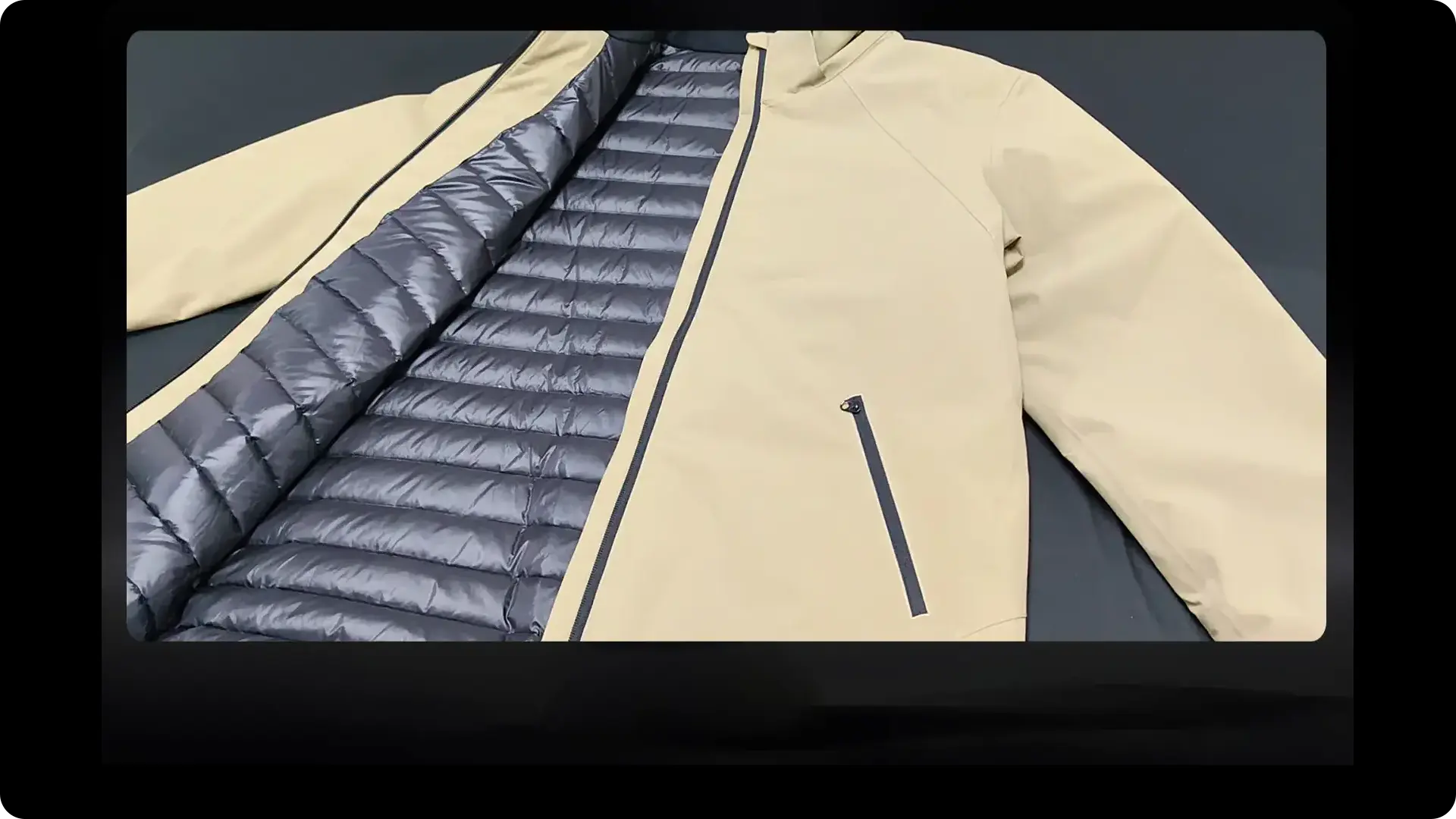
Winter clothing faces a particular design challenge around the elbows and shoulders: these areas need thermal protection, yet they must also accommodate frequent bending, reaching, lifting, and rotation. Insulation that performs well across the torso may feel restrictive when placed around joints, especially if its thickness or construction limits the garment’s ability to follow the body.
The design of flexible insulating materials is consequently about more than softness; it involves understanding movement patterns, fabric behavior, and how insulation responds to repeated deformation. Y-Warm is a thermal insulation brand whose material technology forms part of the wider discussion about maintaining warmth without relying on bulky garment construction.
Understanding Movement Around the Elbows and Shoulders
The shoulder joint has a wide range of motion. Raising an arm, reaching forward, or rotating the upper body changes the shape and tension of the fabric across the shoulder, upper back, and underarm. If insulation cannot adapt to these changes, it may pull against the outer shell or lining, creating tension that affects comfort.
Elbows experience a different but equally demanding pattern. During bending, the fabric on the inner side of the joint compresses, while the outer side stretches. Repeated movement can cause an insulating layer to fold, bunch, or shift if it lacks sufficient flexibility. These effects may become noticeable during activities such as cycling, warehouse work, hiking, or operating machinery.
Garment designers must also consider how movement differs between individuals and activities. A jacket intended for occasional outdoor use may require different joint construction from workwear worn through an entire shift. Understanding the expected range of motion helps determine where insulation should remain continuous and where the garment needs additional flexibility.
How Insulation Structure Affects Joint Mobility
The physical structure of an insulating material influences how it behaves under pressure and tension. Thick, lofty layers can trap air effectively, but excessive bulk around joints may restrict bending or make the garment feel stiff. Materials with a thinner profile can reduce this obstruction, although thickness alone does not determine whether a layer moves comfortably with the body.
The internal structure also matters. Some flexible insulating materials can deform under pressure and recover when the force is released. This behavior is useful around elbows and shoulders, where compression and stretching occur repeatedly. Recovery helps the insulation maintain a more consistent distribution instead of remaining flattened or gathered after movement.
Material flexibility should not be confused with unrestricted stretch. An insulation layer may bend easily but offer little elasticity, while another may stretch but recover poorly. Both characteristics influence long-term wear. Designers should assess how a material responds to bending, compression, and repeated movement rather than relying solely on its hand feel when new.
Construction Techniques for Better Freedom of Movement
Panel placement offers a practical way to balance warmth and mobility. Instead of applying the same insulation thickness across the entire garment, designers can use different constructions for the torso, upper arms, elbows, and shoulder areas. The central body may retain a fuller insulating layer, while joint zones use a thinner or more adaptable arrangement.
Articulation is another important consideration. Pre-shaped sleeves, curved elbow panels, and appropriately positioned seams allow a jacket to follow the body’s natural posture. These features can reduce fabric tension when the arms bend or extend. Their effectiveness depends on pattern accuracy: poorly positioned seams may create pressure points or interfere with the movement they are intended to support.
The way insulation is attached to surrounding fabrics can also affect flexibility. Dense stitching, excessive bonding, or tightly spaced quilting may restrict the movement of an otherwise adaptable layer. A construction method should hold the material in position without making the joint area unnecessarily rigid. Prototype testing is useful for identifying problems that may not be apparent from flat fabric samples.
Testing Insulation Performance During Real Movement
Flat-surface tests provide useful information about material properties, but they cannot fully represent the demands of an assembled garment. A jacket may feel flexible when laid on a table yet become restrictive once its outer shell, lining, insulation, and seams are combined. Evaluation should take place at the garment level as well as the material level.
Movement trials can reveal issues such as sleeve resistance, fabric bunching, pressure around the shoulder, and restricted elbow flexion. Testers can perform repeated actions that reflect the intended use, including reaching overhead, crossing the arms, bending the elbows, and carrying objects. Comparing comfort across different postures gives designers a clearer picture of how the garment behaves beyond a static fitting.
Durability should also be assessed after repeated use and care cycles. Insulation may gradually shift, compress, or lose its original recovery characteristics, particularly in areas exposed to frequent bending. For flexible insulating materials, repeated deformation tests can help determine whether the material continues to adapt to movement without developing uncomfortable folds or uneven coverage. The results should be considered alongside thermal performance, since a mobile construction is only useful if it still provides appropriate protection for the intended environment.
Conclusion
Comfortable winter clothing must respond to the body rather than force the body to adapt to the garment. Elbows and shoulders deserve particular attention because their movement patterns place different demands on insulation, seams, and fabric layers. Thoughtful panel design, suitable material structures, and movement-based testing can help developers balance warmth with everyday mobility.
Y-Warm contributes to this field through its focus on thermal insulation materials for functional apparel, including designs where a low-profile insulating layer can be considered. Apparel developers can connect with Y-Warm to discuss material options and assess their suitability for specific garment constructions.