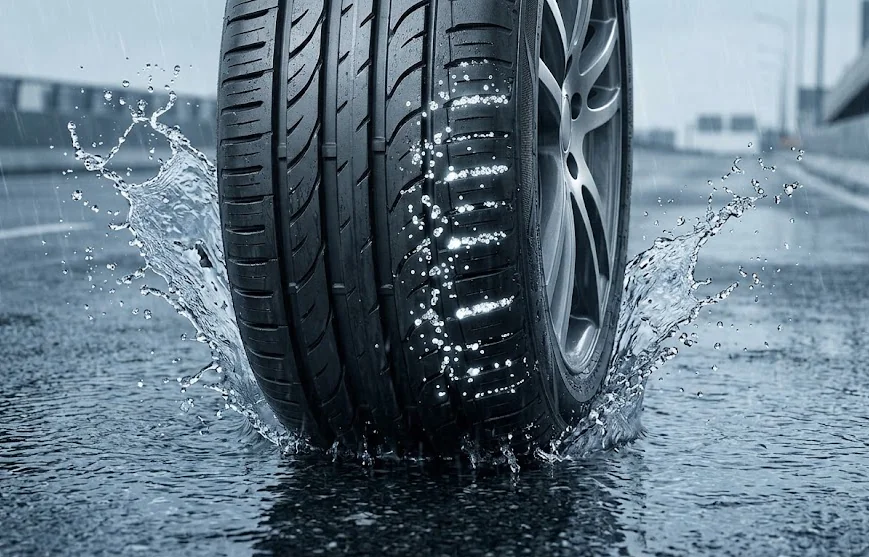
Transportation costs are closely linked to fuel consumption, tire performance, and vehicle maintenance. For tire manufacturers and fleet operators, improving energy efficiency without compromising safety or durability is an important consideration. Low rolling resistance silica offers a practical approach to addressing these challenges. As a functional form of white carbon black, silica helps optimize tire compound performance, reducing the energy lost as tires roll and supporting more economical transportation.
Understanding how silica works, what influences its performance, and how to select the right material can help manufacturers develop tires that meet evolving efficiency requirements.
Understanding Rolling Resistance and Its Impact on Fuel Costs
Rolling resistance refers to the force that opposes a tire’s forward movement as it rolls along a road. When a tire continuously deforms and recovers under load, some energy is dissipated as heat. This energy loss increases the power required to keep a vehicle moving, which can contribute to higher fuel consumption in conventional vehicles and reduced driving range in electric vehicles.
For commercial fleets, even incremental improvements in rolling resistance can matter. Trucks and delivery vehicles often cover long distances, making tire efficiency a recurring operational concern. Lower energy consumption can help reduce operating expenses over time, particularly when improvements are applied across an entire fleet.
However, reducing rolling resistance is not simply a matter of making tires harder or less flexible. Tire compounds must also provide sufficient wet grip, wear resistance, and structural durability. Material selection therefore plays a significant role in balancing efficiency with reliable road performance.
How White Carbon Black Improves Tire Efficiency
White carbon black, commonly known as precipitated silica in tire applications, is an important reinforcing material used in rubber formulations. When appropriately dispersed and combined with a suitable coupling agent, silica can improve the balance between rolling resistance, wet traction, and tread wear.
One of its main benefits comes from its viscoelastic behavior within rubber compounds. Tire rubber repeatedly deforms as it contacts the road. By optimizing the compound’s energy dissipation characteristics, manufacturers can reduce heat generation during rolling and improve overall energy efficiency.
Unlike conventional reinforcing approaches that may involve tradeoffs between different performance properties, silica based compounds provide opportunities to improve several tire characteristics simultaneously. The actual results depend on silica properties, loading levels, dispersion quality, rubber selection, and the overall formulation.
For manufacturers developing fuel efficient passenger car tires or commercial vehicle tires, selecting suitable white carbon black can support compound optimization and help meet performance targets.
Why Low Rolling Resistance Silica Matters for Transportation Costs
Low rolling resistance silica can contribute to transportation savings through several interconnected factors.
First, reduced rolling resistance can lower the energy required for vehicle movement. For gasoline and diesel vehicles, this may translate into improved fuel economy. For electric vehicles, lower energy consumption can support greater driving range or reduce the electricity required per kilometer.
Second, efficient tire compounds can help manufacturers develop products that meet demanding efficiency standards while maintaining practical performance requirements. This is particularly relevant for fleets operating under tight cost controls, where fuel and energy expenses account for a substantial portion of total operating costs.
Third, balanced compound performance can support tire durability when the formulation is properly engineered. Longer tire service life may reduce replacement frequency, maintenance downtime, and associated labor expenses. Nevertheless, silica alone does not guarantee longer tread life, as wear also depends on tire design, road conditions, vehicle loading, and driving behavior.
The greatest economic value comes from evaluating rolling resistance alongside tread wear, traction, and the total cost of tire ownership.
Selecting the Right Silica for Tire Manufacturing
Choosing low rolling resistance silica requires more than comparing product specifications. Manufacturers should evaluate key properties such as specific surface area, particle structure, moisture content, and dispersion behavior. These factors influence reinforcement efficiency, compound processing, and the interaction between silica and rubber.
Consistent material quality is equally important. Variations in raw materials can affect mixing behavior, compound viscosity, and finished tire performance. Reliable specifications and technical support help manufacturers maintain production consistency while refining formulations for different tire categories.
JSJ Silica offers TIRESIL 165MP for tire related applications. Manufacturers can review the product’s technical specifications and assess its suitability for their formulations through the TIRESIL 165MP product page. Actual performance should be confirmed through formulation trials and appropriate tire testing.
Turning Material Selection into Measurable Savings
The financial benefits of low rolling resistance silica are best assessed through a structured evaluation. Tire manufacturers can compare candidate formulations under consistent testing conditions, measuring rolling resistance alongside wet grip, abrasion resistance, processing characteristics, and durability.
Fleet operators can then evaluate the practical impact through fuel or electricity consumption, tire replacement intervals, and maintenance records. This approach connects material development with real operating costs instead of relying on a single performance indicator.
For transportation businesses facing continued pressure to improve efficiency, low rolling resistance silica provides an important material option. By combining suitable white carbon black with careful formulation and testing, manufacturers can develop tires that support lower energy consumption, dependable road performance, and more competitive lifecycle costs. JSJ Silica‘s TIRESIL 165MP is one product worth evaluating as part of this process.