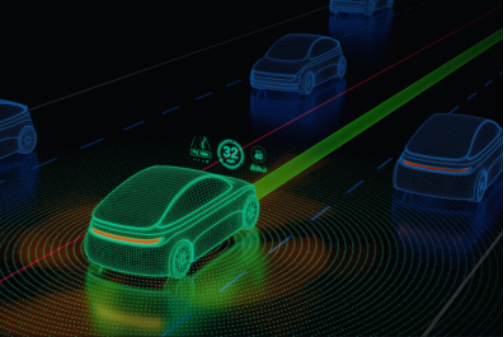
As autonomous driving technology advances, vehicle perception systems are generating unprecedented volumes of data. Modern autonomous platforms rely on multiple sensors, including LiDAR, cameras, radar, and ultrasonic devices, to create a real-time understanding of the surrounding environment. Processing and transmitting this information efficiently have become a major challenge for automotive technology developers. As a result, high-speed optical communication solutions such as the 800G Optical Transceiver are attracting increasing attention. At the same time, emerging photonic applications are helping support the bandwidth, latency, and reliability requirements of next-generation perception architectures. This article explores the role of advanced optical technologies in autonomous driving and how Liobate contributes to the development of photonic solutions for high-performance data transmission environments.
The Data Challenge Behind Autonomous Driving
Autonomous vehicles depend on the continuous collection and analysis of sensor data. A single vehicle may generate terabytes of information every day through a combination of cameras, LiDAR systems, radar sensors, and vehicle-to-everything (V2X) communication technologies.
To transform this data into actionable insights, perception systems must process information with extremely low latency while maintaining high levels of accuracy. This requirement places significant pressure on internal communication networks, edge computing platforms, and data center infrastructure responsible for training and validating autonomous driving models.
As sensor resolutions increase and artificial intelligence algorithms become more sophisticated, traditional electrical interconnect technologies face limitations related to bandwidth, power consumption, and signal integrity. This has created opportunities for advanced photonic applications capable of supporting much higher data transmission rates.
The Role of Optical Communication in Vehicle Perception Ecosystems
While much of the attention surrounding autonomous driving focuses on sensors and AI software, communication infrastructure plays an equally important role. Data generated by perception systems must be transmitted quickly and reliably between sensors, processors, storage systems, and cloud environments.
Optical communication technologies offer several advantages over traditional electrical transmission methods. These include higher bandwidth capacity, lower signal loss, reduced electromagnetic interference, and improved scalability for future system upgrades.
As autonomous vehicle ecosystems continue to evolve, the deployment of advanced optical solutions is expected to increase across multiple areas, including data center interconnects, high-performance computing clusters, simulation environments, and intelligent transportation infrastructure.
In many of these environments, the 800G Optical Transceiver is emerging as a key enabling technology capable of supporting large-scale data movement while maintaining operational efficiency.
Why 800G Optical Transceivers Matter for AI-Driven Mobility
Supporting Massive Data Throughput
One of the primary advantages of the 800G Optical Transceiver is its ability to accommodate extremely high data transmission rates. Autonomous driving development relies heavily on AI training systems that process enormous datasets generated from real-world driving scenarios.
High-capacity optical links allow organizations to move data more efficiently between storage resources, training clusters, and edge computing environments. This capability becomes increasingly important as perception models grow in complexity and require larger datasets for validation.
Reducing Infrastructure Bottlenecks
Network bottlenecks can significantly impact the efficiency of AI development workflows. Delays in data movement may increase training times and reduce overall system productivity.
By deploying high-bandwidth optical solutions, organizations can reduce transmission constraints and improve resource utilization throughout their infrastructure. This is particularly valuable for automotive manufacturers, autonomous driving software developers, and cloud service providers supporting mobility-focused workloads.
Enabling Future Scalability
The volume of perception data generated by autonomous vehicles is expected to continue increasing over the coming years. Future sensor technologies will likely produce even higher-resolution data streams that require more advanced communication architectures.
Scalable optical technologies, including the 800G Optical Transceiver, provide a pathway for supporting these growing bandwidth requirements without requiring complete infrastructure redesigns.
Photonic Applications Driving Innovation in Autonomous Systems
The rapid growth of autonomous mobility has accelerated investment in advanced photonic applications across the transportation and communications sectors. Photonic technologies are increasingly being used to improve system performance, reduce latency, and enable new capabilities that are difficult to achieve using purely electronic approaches.
Examples of relevant photonic applications include:
- LiDAR signal generation and processing
- High-speed optical interconnects
- Data center communication networks
- AI training infrastructure
- Vehicle-to-infrastructure communication systems
- Optical sensing and environmental monitoring
These photonic applications support the broader ecosystem required for autonomous vehicle development while helping organizations address growing data transmission demands.
The Importance of Thin-Film Lithium Niobate Technologies
As optical communication requirements become more demanding, attention has increasingly shifted toward advanced photonic materials capable of supporting higher performance levels. Thin-film lithium niobate technology has gained recognition due to its ability to deliver high bandwidth, low insertion loss, and strong electro-optic performance.
For optical communication systems supporting AI-driven mobility platforms, these characteristics can contribute to more efficient signal transmission and improved scalability. Thin-film lithium niobate devices are being explored across a wide range of next-generation networking and sensing applications.
The combination of photonic integration and advanced material platforms is expected to play an important role in future transportation infrastructure as autonomous systems become more sophisticated.
How Liobate Supports Advanced Photonic Innovation
Liobate focuses on the development of thin-film lithium niobate technologies for high-performance photonic solutions. Through ongoing research and engineering efforts, Liobate supports applications that require high bandwidth, low power consumption, and reliable optical signal transmission.
The company’s expertise in photonic device development aligns with the growing demand for advanced communication technologies used in AI infrastructure, optical networking, and emerging intelligent transportation ecosystems.
As autonomous driving systems continue to evolve, organizations are increasingly evaluating photonic technologies that can support future scalability and performance requirements. The advancement of optical communication platforms is expected to remain a key component of this transformation.
Conclusion
The future of autonomous driving depends not only on better sensors and more advanced AI models but also on the communication infrastructure that enables efficient data movement. High-capacity solutions such as the 800G Optical Transceiver are becoming increasingly important for supporting perception systems, AI training environments, and intelligent transportation networks. At the same time, innovative photonic applications continue to expand the possibilities of optical communication across mobility ecosystems. By advancing thin-film lithium niobate technologies, Liobate contributes to the ongoing development of photonic solutions designed for next-generation data-intensive environments.