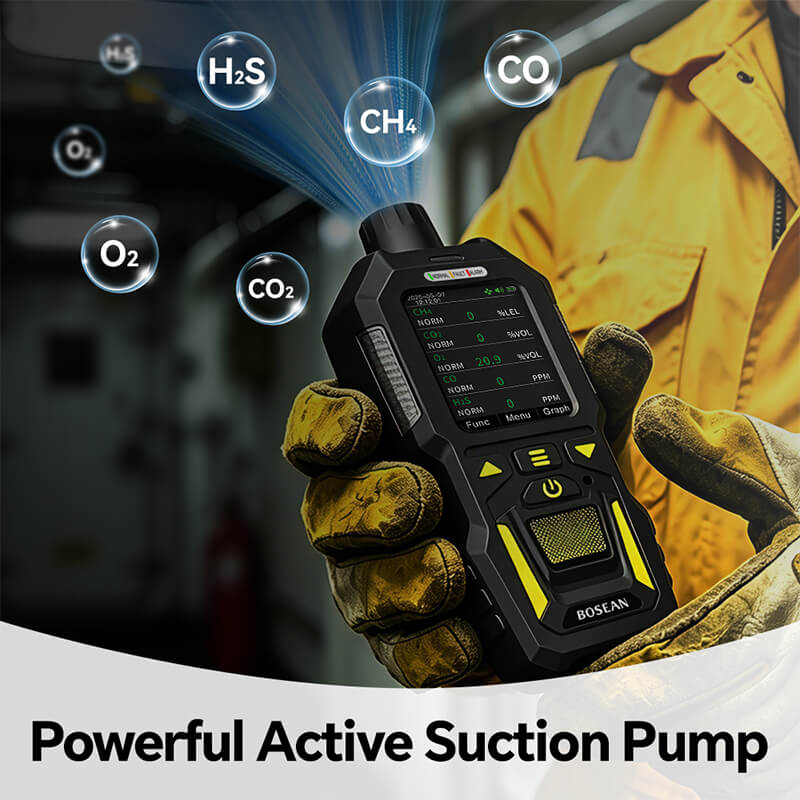
Confined space work in shipyards exposes workers to oxygen deficiency, toxic gases and flammable atmospheres inside tanks, holds and enclosed machinery spaces. Before entry, teams must assess atmospheric conditions at different depths, allow sufficient sampling time and verify that readings meet safety requirements. A portable gas detector with pumped sampling helps identify potential hazards before workers enter.
However, reliable protection also requires proper ventilation, equipment isolation, entry permits, continuous monitoring where necessary and emergency preparedness.
Why Shipyard Confined Spaces Require Gas Testing
Shipyards contain spaces with limited openings and restricted natural ventilation. Welding, coating, cleaning, fuel residues and cargo remnants can introduce or release hazardous substances. Oxygen may also be displaced by inert gases or consumed through chemical processes. Consequently, atmospheric conditions can change during maintenance, making previous test results insufficient for authorizing later entry.
Gas testing should begin with a hazard assessment. Competent personnel need to review vessel history, previous cargo, ongoing operations and connected systems to identify possible contaminants. This assessment determines which gases require measurement and where samples should be collected. A portable gas tester is effective only when its sensor configuration matches the hazards identified.
Which Gases Should Be Checked Before Entry?
A typical pre-entry assessment covers oxygen, flammable gases or vapours, and relevant toxic gases. Oxygen measurements identify deficient or enriched conditions. Flammable-gas readings indicate potential combustible atmospheres, while toxic-gas sensors detect substances associated with cargo, maintenance materials or industrial processes.
Testing should follow a systematic sequence. Common confined-space practice involves checking oxygen first, followed by flammable gases and toxic contaminants, subject to instrument instructions and site procedures. Workers should never assume that one measurement represents an entire compartment. Gas concentrations can vary between upper, middle and lower levels, making multi-level sampling important.
How Pumped Sampling Supports Remote Inspection
A built-in pump draws air through a probe or sampling tube and delivers it to the sensors. This allows operators to examine a tank or compartment from outside before authorizing entry. By lowering the sampling line to different depths, personnel can investigate atmospheric variations without immediately exposing themselves to potentially hazardous conditions.
Sampling equipment also requires attention. Tube length, material, connection integrity, moisture and blocked filters can influence response time and measurement reliability. Operators should allow sufficient time for samples to reach the sensors and readings to stabilize. Regular flow checks and tubing inspections help identify problems before testing begins.
The BTYMQ-BX403 Marine Gas Detector from Bosean features a built-in sampling pump for gas detection. It can detect up to five gases simultaneously and uses high-quality sensors designed to provide sensitivity and repeatability. This configuration supports atmospheric checks in marine environments where remote sampling is important for preliminary safety assessments.
Selecting Suitable Equipment for Shipyard Operations
Shipyard procurement teams should select instruments according to their hazard assessments rather than relying exclusively on the maximum number of detection channels. Important considerations include sensor types, measurement ranges, alarm thresholds, response characteristics and operating limitations. A portable gas detector should also suit the working environment, particularly where moisture, dust and physical impacts are possible.
The BTYMQ-BX403 features a casing made from high-strength engineering plastics combined with anti-slip rubber. Its waterproof, dustproof and explosion-proof construction is designed for demanding field conditions. Additional functions include gas-unit switching and screen rotation, allowing operators to adjust how measurement information is displayed.
Before purchasing, buyers should verify applicable protection ratings, certifications and operating conditions through official product documentation. They should also consider calibration requirements, replacement sensors, sampling accessories and technical support. These factors influence long-term operating reliability and maintenance costs.
Establishing a Reliable Pre-Entry Testing Procedure
A consistent testing procedure reduces the possibility of overlooked hazards. First, personnel should review the entry permit, risk assessment, vessel information and isolation arrangements. Connected pipelines, machinery and energy sources must be controlled according to established procedures. The instrument’s battery, sensor condition, calibration status and alarm functions should also be checked before use.
Next, atmospheric samples should be collected from outside the confined space at appropriate depths and locations. Operators should avoid positioning themselves where escaping gases could create additional exposure. Readings, sampling locations and testing times should be documented according to the permit system. If measurements fall outside established entry criteria, entry must not proceed until appropriate controls are implemented and testing is repeated.
Pre-entry testing alone may not provide sufficient protection. Welding, cleaning, coating and ventilation changes can alter atmospheric conditions. Depending on the risk assessment, repeated measurements or continuous monitoring may be necessary. Workers must understand alarm responses, evacuation procedures, communication arrangements and rescue plans before starting their tasks.
Maintenance, Training and Technical Support
Measurement reliability depends on regular equipment maintenance. Calibration should follow manufacturer recommendations and workplace requirements. Sensors, filters, sampling tubes and pump components should be inspected and replaced when necessary. Maintaining inspection and calibration records helps safety managers identify overdue maintenance and recurring equipment problems.
Operator training is equally important. Personnel should understand sampling time, sensor limitations, alarm interpretation and appropriate responses to abnormal readings. A portable gas tester cannot independently guarantee safe entry; its measurements must be interpreted within the broader confined-space safety procedure.
Bosean develops and sells gas detection and measurement instruments while providing technical services for customers. Its marine-oriented BTYMQ-BX403 offers pumped sampling and multi-gas detection for relevant inspection applications. Shipyard buyers can consider these capabilities alongside documentation, maintenance arrangements and technical assistance when evaluating equipment.
Making Atmospheric Testing Part of Shipyard Safety
Safe confined-space operations depend on identifying atmospheric hazards before entry and recognizing that conditions may change during work. Appropriate sensor selection, multi-level sampling, equipment checks and clear alarm procedures all contribute to informed decisions. A portable gas detector such as the BTYMQ-BX403 can support remote atmospheric assessment, while ventilation, isolation, trained personnel and emergency planning remain essential parts of an effective safety system.