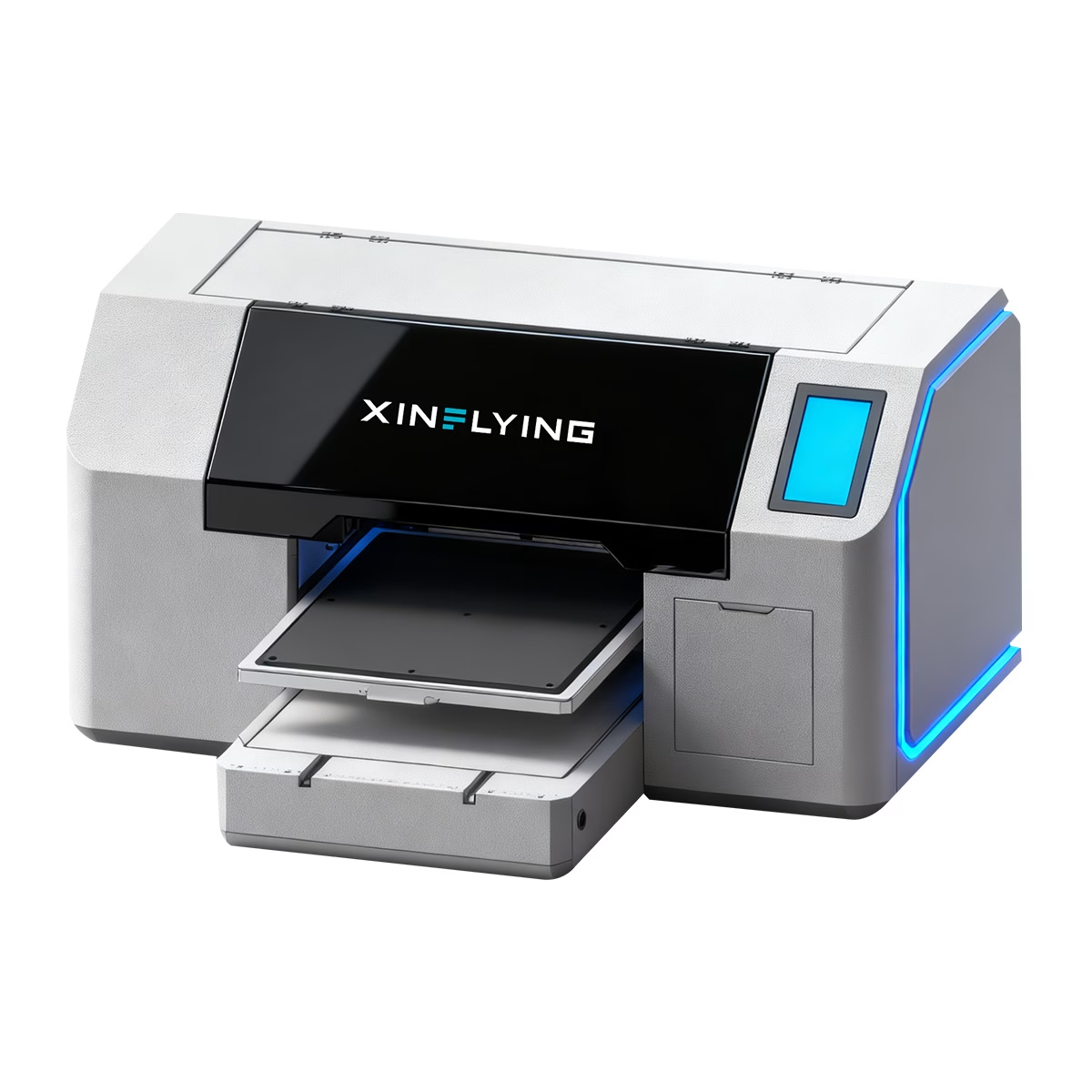
A direct to garment printer for sale can represent more than a new piece of equipment for a custom apparel business. It can determine how efficiently a company handles short runs, personalized orders, and recurring production. For business buyers, the right purchase should balance print quality, labor requirements, workflow efficiency, versatility, and expected production demand rather than focusing only on the initial machine price.
A practical investment checklist helps buyers compare equipment on measurable business value. Features such as printhead technology, process integration, garment compatibility, and ease of operation can directly influence production costs and customer satisfaction.
Start With the Actual Production Requirements
The first step is matching the printer with the business model. A company producing customized t-shirts on demand has different requirements from a garment manufacturer handling larger recurring orders. Expected daily volume, design complexity, garment types, and turnaround requirements should all be considered before evaluating a direct to garment printer for sale.
Businesses should also assess future demand. Buying equipment with insufficient capacity may create bottlenecks as orders increase, while investing heavily in unused capacity can unnecessarily raise capital costs. The goal is to find a practical balance between current requirements and realistic growth expectations.
Evaluate Print Quality and Printhead Technology
Printhead technology has a direct relationship with image quality, color accuracy, and production performance. Buyers should therefore examine the printhead model rather than relying solely on broad descriptions such as “high resolution” or “professional quality.”
The XF-DTG-10 I3200 A1 T-Shirt DTG Printer from Xinflying uses two Epson i3200-A1 printheads. The supplied product information highlights its ability to produce vibrant, high-resolution designs while supporting fast production times.
For apparel businesses, consistent color reproduction and detailed output are particularly important. Customers purchasing customized garments often expect artwork to closely match the supplied design. Consistent printing can help reduce reprints and protect production margins.
Look for Workflow Integration That Saves Labor
Labor efficiency can have a major impact on the economics of a DTG operation. Traditional workflows may require separate stages for pretreatment and printing, creating additional handling and increasing opportunities for inconsistency.
The XF-DTG-10 integrates automatic pretreatment and high-resolution printing within one compact machine. This all-in-one configuration is designed to streamline the printing process, reduce manual work, and improve production consistency.
For businesses evaluating a direct to garment printer for sale, integrated functionality deserves careful attention. A machine that reduces handling between production stages can potentially simplify operator training and make the workflow easier to manage, particularly for small and medium-sized apparel operations.
Consider the Garments and Materials You Need to Print
Material compatibility should be evaluated against the actual products a business sells. A printer may perform well technically but still be a poor investment if it cannot support the garment categories required by the company’s customers.
The XF-DTG-10 is positioned for t-shirt printing, on-demand production, and other garment applications..
Before purchasing, buyers should confirm which garment compositions and colors are appropriate for their intended workflow. Testing representative garments can provide more useful information than relying solely on general compatibility claims.
Calculate Yield Instead of Focusing Only on Purchase Price
A low-cost printer is not automatically a high-yield investment. Business buyers should consider the cost of labor, pretreatment, ink, maintenance, rejected garments, and production downtime alongside the initial equipment investment.
The relevant question is how efficiently the machine converts operating resources into sellable garments. Faster production, consistent output, and reduced manual intervention can all contribute to improved production economics when order volume is sufficient.
For this reason, businesses should build a simple cost-per-garment model before purchasing. Estimating expected monthly output and operating expenses can reveal whether a particular direct to garment printer for sale fits the company’s commercial objectives.
Assess Whether the Machine Fits Your Business Size
Equipment should also match the operational capabilities of the purchasing company. Small and medium-sized businesses may prioritize compact equipment, simplified workflows, and manageable operation over extremely high industrial capacity.
The XF-DTG-10 is described as a compact, high-performance DTG solution for small to medium businesses. Its integrated pretreatment and printing functions may be particularly relevant to companies seeking to consolidate multiple workflow stages within a single system.
A compact configuration can also make it easier for businesses with limited production space to establish or expand an apparel printing operation without immediately building a large-scale production floor.
Choose a Supplier That Supports the Investment
The machine itself is only one part of the purchasing decision. Supplier capabilities can influence installation, operator training, maintenance, troubleshooting, and long-term equipment utilization.
When researching an Xinflying DTG printer manufacturer, buyers should examine the available product documentation, technical support, warranty arrangements, and communication channels. A supplier that can provide clear technical information can make equipment evaluation more straightforward.
The broader product portfolio should also be considered. Xinflying provides printing equipment across DTG, DTF, UV DTF, and related digital printing applications. This wider offering may be relevant for businesses that expect to expand beyond one apparel decoration process as their customer base develops.
Build a Checklist Before Making the Purchase
A structured comparison can reduce the risk of buyers from being distracted by isolated specifications. The checklist should include printhead technology, print quality, workflow integration, material compatibility, expected production volume, labor requirements, maintenance, available support, and total operating cost.
The XF-DTG-10 provides several features worth evaluating within this framework: an Epson I3200 A1 printhead, automatic pretreatment, high-resolution printing, compact all-in-one construction, and positioning for custom t-shirt and small-scale garment production.
These features do not automatically make one printer suitable for every business. Their value depends on whether they address the buyer’s specific production requirements and expected order profile.
Making a More Confident DTG Investment
Choosing a direct to garment printer for sale should ultimately be a business decision supported by production data. Printhead technology, workflow automation, garment compatibility, operating costs, and supplier support all contribute to the machine’s potential return.
The XF-DTG-10 offers an integrated approach by combining automatic pretreatment with DTG printing and using an Epson I3200 A1 printhead for high-resolution garment decoration. For businesses comparing equipment, these specifications provide a useful starting point for assessing practical production value.
Working with an experienced Xinflying DTG printer manufacturer can further help buyers connect equipment capabilities with their intended applications. By evaluating the complete workflow instead of simply comparing purchase prices, apparel businesses can make a more informed investment and select DTG equipment with stronger long-term potential.