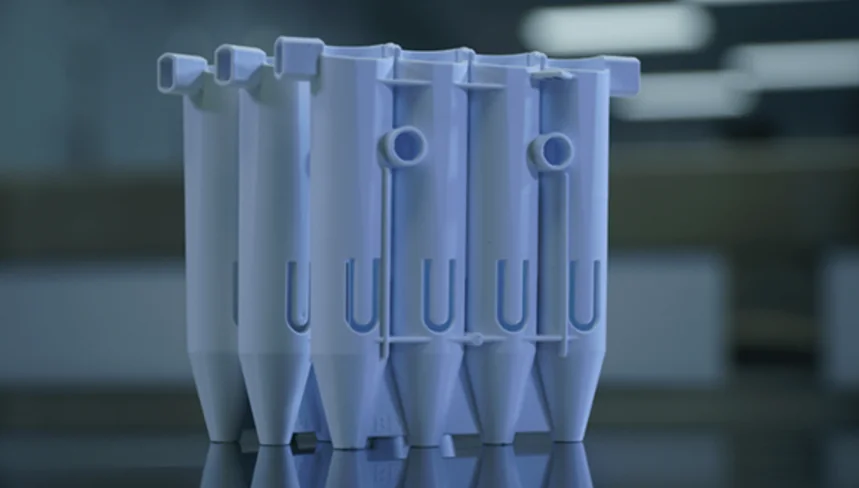
Medical product development combines several kinds of uncertainty. A component may look correct in CAD but still create problems in assembly, handling, material choice, manufacturability, or later verification.
Medical prototyping reduces those risks by turning design assumptions into physical evidence before production decisions become difficult or expensive to reverse.
APT-Mold supports medical prototype work through CNC machining, 3D printing, injection molding, vacuum casting, and sheet metal fabrication. A medical device prototyping service is most useful when each build has a specific purpose. Different prototypes serve different purposes, from checking basic geometry to testing function and manufacturability.
Early Prototypes Expose Physical Design Problems
A digital model can show dimensions and clearances, but it does not always communicate how a device feels, assembles, or occupies space in the real world. Early prototypes allow teams to inspect overall size, mounting relationships, access to controls, interface positions, enclosure fit, and the sequence used to put components together.
These checks can reveal issues that seem minor on a drawing. A fastener may be difficult to reach once another part is installed. A connector may be technically clear of surrounding geometry but awkward to access. A housing may meet its outer dimensions yet still create an unnecessary assembly constraint.
Where usability is part of the development question, representative evaluation can also identify awkward interactions before formal validation activities begin. Medical prototyping does not replace those later activities; it helps determine which design details still need refinement before a more controlled test is justified.
Choose the Prototype Process According to the Development Question
Different manufacturing methods produce different kinds of evidence. CNC machining is useful for precise metal or plastic parts where dimensions, interfaces, and functional strength need closer review.
3D printing supports rapid geometry iteration and complex shapes without tooling. Vacuum casting provides several similar parts for repeated fit, appearance, or functional evaluation.
Sheet metal fabrication is relevant for housings, brackets, trays, covers, and structural components. Injection molding becomes more useful when the development question concerns molded-plastic behavior or when the design is moving toward a scalable molding route.
A medical device prototyping service should therefore begin with the test objective rather than the preferred process. If the question is only whether two components fit, a quick geometry model may be sufficient. If the question involves material behavior, repeated assembly, surface condition, or production feasibility, the prototype needs to be more representative.
APT-Mold lists materials including polypropylene, PEEK, stainless steel, and aluminum within its medical-device information. Material choice still needs to match the intended evaluation and any later application-specific requirements.
Separate the Risks Instead of Asking One Prototype to Prove Everything
A common development mistake is treating a successful prototype as evidence that the whole product is ready. In reality, different builds may be needed to study geometry, assembly, function, materials, and manufacturability at different levels of maturity.
A practical sequence might include:
- an early model for layout and component access;
- a second build for fit, assembly, and interface checks;
- a functional version using a more relevant material;
- a later prototype made through a process closer to intended production.
This staged approach makes test results easier to interpret. If a problem appears, the team can connect it to the purpose of that build instead of trying to diagnose several changed variables at once.
Traceability also matters. The design revision, material, manufacturing method, test conditions, acceptance criteria, and measured results should be recorded. Human participants only need to be included where the evaluation actually involves users; dimensional, bench, and assembly tests do not automatically require participant data.
Prototyping Supports Manufacturability but Does Not Grant Regulatory Authorization
A functional sample may perform well and still need significant work before production. Features that are easy to print or machine can become difficult when the final route changes to molding or higher-volume fabrication. DFM helps identify those gaps and prevents prototype-specific geometry from being carried forward without review.
Using a medical device prototyping service can support design validation, functional testing, and preparation for scalable manufacturing, but a prototype is not equivalent to a device authorized for clinical use. APT-Mold’s published medical guidance makes that distinction explicit and states that clinical use requires the appropriate regulatory approval.
That boundary is important because engineering evidence and regulatory authorization answer different questions. Prototype work can reduce uncertainty around geometry, material, assembly, and manufacturing feasibility; formal verification, validation, regulatory documentation, and clinical-use decisions remain separate parts of the broader development process.
Conclusion
Medical prototyping de-risks the development process by validating every design assumption. Early builds can expose layout and assembly problems, while later versions provide stronger evidence about function, material choice, and manufacturability.
The value comes from matching the process to the purpose, recording what each prototype actually proves, and keeping engineering readiness separate from regulatory authorization. A well-planned medical device prototyping service supports better development decisions without overstating what any single sample can demonstrate.