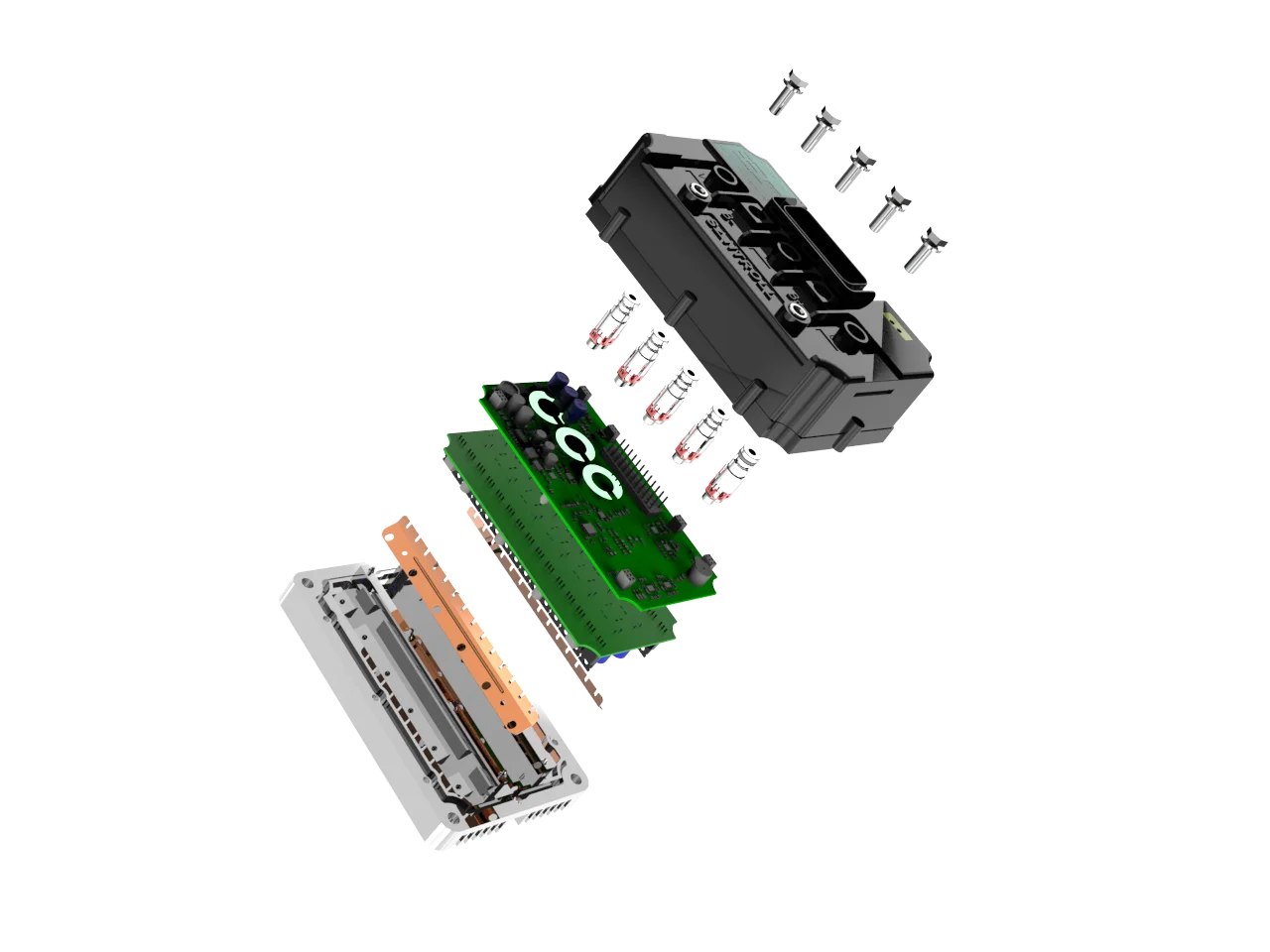
Integrating an AC motor speed controller with custom-engineered electric motors presents both technical considerations and potential performance benefits. The success of this integration depends on several engineering factors that determine how effectively the controller can manage a motor’s unique electrical characteristics. When properly executed, this pairing enables specialized motion applications that standard offerings cannot address. Santroll examines these parameters when configuring their motor controller systems for bespoke applications.
Electrical Parameter Alignment
The compatibility process begins with matching the motor controller output to the motor’s electrical specifications. Custom motors often feature unique winding configurations, voltage ratings, or impedance characteristics that require specific drive signals. An AC motor speed controller must be capable of delivering the appropriate voltage and frequency profiles to match these custom parameters without causing excessive heating or inefficient operation. This alignment ensures the motor controller can fully utilize the motor’s designed performance envelope.
Control Algorithm Adaptation
Standard control algorithms may not optimize performance for motors with non-standard designs. Advanced AC motor speed controller units offer programmable parameters that can be tuned to a custom motor’s torque-speed curve and electrical time constants. This motor controller programmability allows for customization of acceleration ramps, current limits, and compensation filters specifically for the unique motor dynamics. Santroll utilizes this capability to maximize the performance of specialized motor designs.
Feedback System Integration
Custom motors frequently employ specialized feedback devices for position or velocity sensing. The AC motor speed controller must support these specific sensor types, whether they are resolvers, encoders, or Hall-effect sensors. This motor controller compatibility ensures accurate closed-loop operation and enables the precise motion control that justifies using a custom motor solution. The feedback interface becomes a critical link in maintaining system accuracy.
The integration between an AC motor speed controller and custom electric motors requires careful technical evaluation but offers significant application advantages. Success depends on electrical compatibility, control system adaptability, and feedback mechanism support. This approach allows engineers to implement optimized motion solutions where standard products prove insufficient. The resulting systems demonstrate how tailored components can achieve specific operational objectives when properly matched.