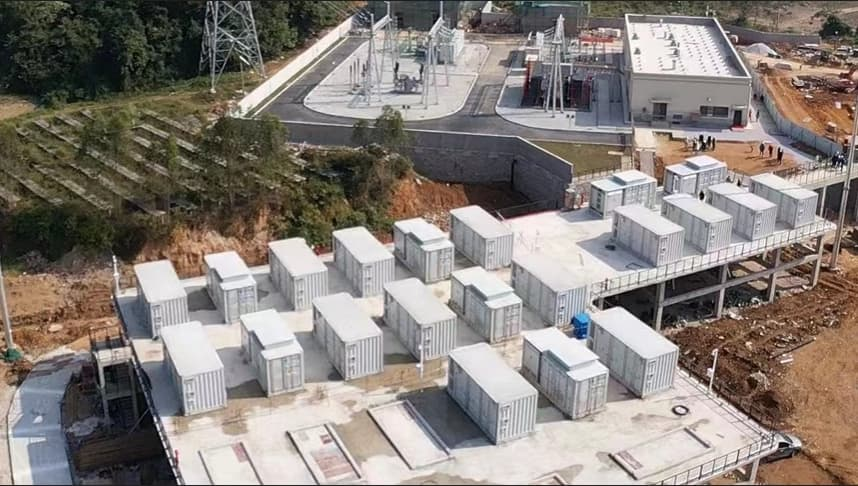
As large-scale energy storage becomes essential for modern power systems, both utility-scale battery storage and pumped hydro have emerged as leading solutions. While both technologies store excess electricity and release it when needed, they differ significantly in flexibility, deployment, and operational characteristics. WHES provides advanced utility-scale energy storage solutions that address the growing demand for scalable and responsive grid infrastructure.
Efficiency and Performance Differences
In terms of efficiency, both technologies perform well but with slight differences. Utility-scale battery storage typically achieves round-trip efficiencies above 80%, offering fast response times and precise energy control. Pumped hydro systems generally operate within a 70–85% efficiency range, making them slightly less efficient but still highly competitive for large-scale use . However, batteries excel in applications requiring rapid dispatch and short-duration balancing, while pumped hydro is often used for longer-duration storage cycles.
Scalability and Deployment Flexibility
A key advantage of utility-scale energy storage is its flexibility in deployment. Battery systems can be installed in a wide range of locations, including near renewable plants or urban demand centers. In contrast, pumped hydro requires specific geographic conditions, such as elevation differences and access to water reservoirs, limiting where it can be built. WHES solutions are designed with modular architectures, allowing utility-scale battery storage to scale efficiently and adapt to evolving grid requirements without major infrastructure constraints.
Cost, Duration, and Application Scenarios
Pumped hydro is known for its ability to deliver long-duration storage, often supporting energy supply for several hours or more, making it suitable for bulk energy shifting. On the other hand, utility-scale battery storage is widely used for applications such as frequency regulation, peak shaving, and renewable smoothing due to its fast response and declining costs. As battery technology continues to evolve, utility-scale energy storage is increasingly competitive across a broader range of use cases.
Choosing the Right Technology for Modern Grids
Both technologies play important roles in the energy transition, and in many cases, they complement rather than replace each other. Pumped hydro remains valuable for long-duration storage, while utility-scale battery storage offers unmatched flexibility and speed. By advancing utility-scale energy storage technologies, WHES supports utilities and developers in building more resilient, efficient, and future-ready energy systems.